
Introduction to Homemade Beef Stew: A Hearty Comfort Meal
This morning, my brother and his wife, along with their three energetic kids, dropped by unexpectedly. They excitedly asked me to whip up a pot of my famous Homemade Beef Stew, a dish that takes me back to those chilly winter evenings when we all gathered around the table after a long week. I can almost see my late mother bustling around the kitchen, a smile on her face, as she would stir the pot, infusing the house with the most warm and inviting aromas of beef, herbs, and earthy vegetables. Every spoonful of that stew carried with it a memory of laughter, stories, and the love that binds us as family.
As I stood there, the children’s eager faces reminded me of my own kids when they were little, anxiously waiting for their bowls to fill with that rich, velvety broth. I still remember one holiday season when we had a big family gathering, and I decided to make this stew for the first time. It filled our home with an enticing scent that drew everyone to the kitchen, and as the kids tugged at my apron, I felt the warmth of those connections, both old and new. There's something magical about watching the steam curl up from the pot, knowing that each bite is more than just a meal; it’s comfort food that nurtures not just the body but the soul. This stew, with its tender chunks of beef, hearty vegetables, and a fragrant broth that warms you from the inside out, is one of those recipes I love to share, especially in the fall and winter when the days grow colder.
Today, it's even more meaningful as I make it for my brother's children—my dear little nieces and nephews who remind me of when my own kids were young. With the clouds heavy with promise of rain this afternoon, it felt like the perfect moment to simmer up a big batch of this Homemade Beef Stew. You see, this dish is more than just comfort food; it’s a vessel of memory and love, a tradition that echoes through generations. It embodies all the best parts of family gatherings where stories are exchanged and bonds are strengthened. So, let’s dive into this delightful recipe that’s begging to be made on a dreary day, and fill your home with warmth and deliciousness together with your loved ones.
Why You'll Love This Homemade Beef Stew: A Hearty Comfort Meal
First off, there's the amazing flavor. This Homemade Beef Stew boasts tender beef, perfectly complimented by aromatic herbs and fresh vegetables that meld together into sheer perfection. It's one of those meals where each ingredient has its role, coming together to create a taste that just keeps you coming back for more. I often find myself savoring each bite, letting the blend of savory beef and sweet carrots wash over my taste buds, the richness of the broth making it an unforgettable experience for any meal.
Secondly, I love that it’s a great make-ahead option. Prepare it on a Sunday afternoon, and your weeknight dinners just got so much easier. You can make a big batch and store portions in the fridge or even freeze some for those unpredictable nights when cooking feels like a chore. I cannot tell you how many times I’ve come home from a long day to find the leftover beef stew just waiting there on the stove, ready to be heated up and enjoyed again. It’s the gift that keeps on giving!
Lastly, it’s a fantastic way to bring the family together. The hearty nature of this stew means every bowl can be filled with love and laughter. Plus, kids tend to adore it because the beef is tender and the flavors are kid-friendly, making it a unanimous hit at the dinner table. I still recall those family dinners when all the kids would enthusiastically finish their bowls, their faces lighting up like little candles, and they would always plead for seconds! It’s a joy to see everyone at the table, sharing their experiences and creating memories around this simple yet satisfying dish.
Ingredients Homemade Beef Stew: A Hearty Comfort Meal
Let’s talk about the ingredients that make this stew so special. Using quality beef is essential for achieving that melt-in-your-mouth texture, and I recommend opting for chuck roast, as it becomes incredibly tender while slowly braising. It’s the kind of beef that takes on flavor beautifully, making the stew rich and satisfying. The classic combination of carrots, potatoes, and herbs elevates the flavor immensely, bringing that comforting feeling with every bite. Here’s what you’ll need for this delightful dish:
Don’t forget to choose fresh veggies! For me, incorporating fresh herbs into this stew is crucial. The dried thyme brings a depth of flavor, but I often have a little bit of fresh thyme on hand, which can make all the difference. Fresh herbs add another layer of brightness and aroma that can significantly enhance the overall experience of enjoying this stew. Here’s what you’ll need for this mouthwatering beef stew:
- 2 pounds (900g) chuck roast, cut into 1-inch pieces
- 3 tablespoons (45ml) vegetable oil
- 1 large onion, diced
- 3 cloves garlic, minced
- 4 cups (1L) beef broth
- 2 cups (300g) carrots, sliced
- 2 cups (300g) potatoes, diced
- 1 cup (150g) frozen peas
- 2 tablespoons (30g) tomato paste
- 2 teaspoons (10g) dried thyme
- 1 bay leaf
- Salt and pepper to taste
- Fresh parsley, chopped for garnish
How to Make Homemade Beef Stew: A Hearty Comfort Meal
Searing the Beef
The first step to building an incredible flavor in your Homemade Beef Stew is to sear the beef. Start by heating the vegetable oil in a large pot or Dutch oven over medium-high heat. Once the oil shimmers, carefully add the chunks of beef, making sure not to overcrowd the pot; I usually do this in batches if needed. Let it cook for 4-5 minutes on each side until they turn golden brown and crisp on the outside; the sound of sizzling is music to my ears. This caramelization is going to give your stew a depth of flavor that you simply can’t achieve otherwise. It’s also quite therapeutic to watch the beef transform in color and texture as it cooks, which brings a little joy to an otherwise busy day!
As the beef sears, resist the urge to move it around too much. Allowing it to form a crust means you’ll lock in those juices that keep the meat wonderfully moist. Each piece will develop a rich brown exterior that not only looks appetizing but holds so much flavor. Once browned, remove the beef from the pot and set it aside temporarily. Try to leave the drippings in the pot; they’re key to building the stew's base and will really amplify the flavors that follow.
Building the Base
Now it’s time to add the onions to the pot, soaking up all those flavorful bits left behind. Adding some diced onions will not only flavor the stew but they'll also help create that aromatic foundation we all know and love. Sauté them for about 5 minutes, stirring occasionally, until they become translucent. You’ll know they are ready when they start to smell sweet and slightly caramelized; this is the moment you want to catch!
Add the minced garlic next, and oh, how it makes the kitchen smell! There's something so inviting about the aroma of garlic sautéing—the anticipation just builds. I often find myself diligently stirring while keeping a keen eye on the pot, as burnt garlic is definitely not desirable. To ensure this delightful scent permeates the kitchen, I keep the heat at a medium level, allowing the flavors to develop fully without scorching.
To deepen the flavor even more, sprinkle in the tomato paste, mixing it well with the onions and garlic, allowing it to cook for another minute. The rich color of the paste adds a lovely hue to your stew, signaling that you’re on the right track. This is where things start to get exciting, as the vibrant orange of the tomato paste contrasts with the soft white and golden of the onions, setting the stage for a visually appealing dish as well. Stirring it in, you can almost envision the flavors marrying each other, and I can’t help but sneak in a little taste now and then (hot but worth it!).
Finishing Touches
Just a few minutes before serving, add the frozen peas; they’ll perk up the stew with their vibrant green color and sweet flavor. They add a lovely sweetness and texture to the dish, balancing what might otherwise be a muted flavor palette. Adjust the seasoning to your taste, adding more salt and pepper if needed. At this point, I often find myself stealing little tastes, making sure it’s just right. The rich combination of beef and vegetables is truly wonderful, but adding those peas offers a pop of freshness and color that makes it visually delightful too. It’s my little secret to bring you as much joy in appearance as in taste!
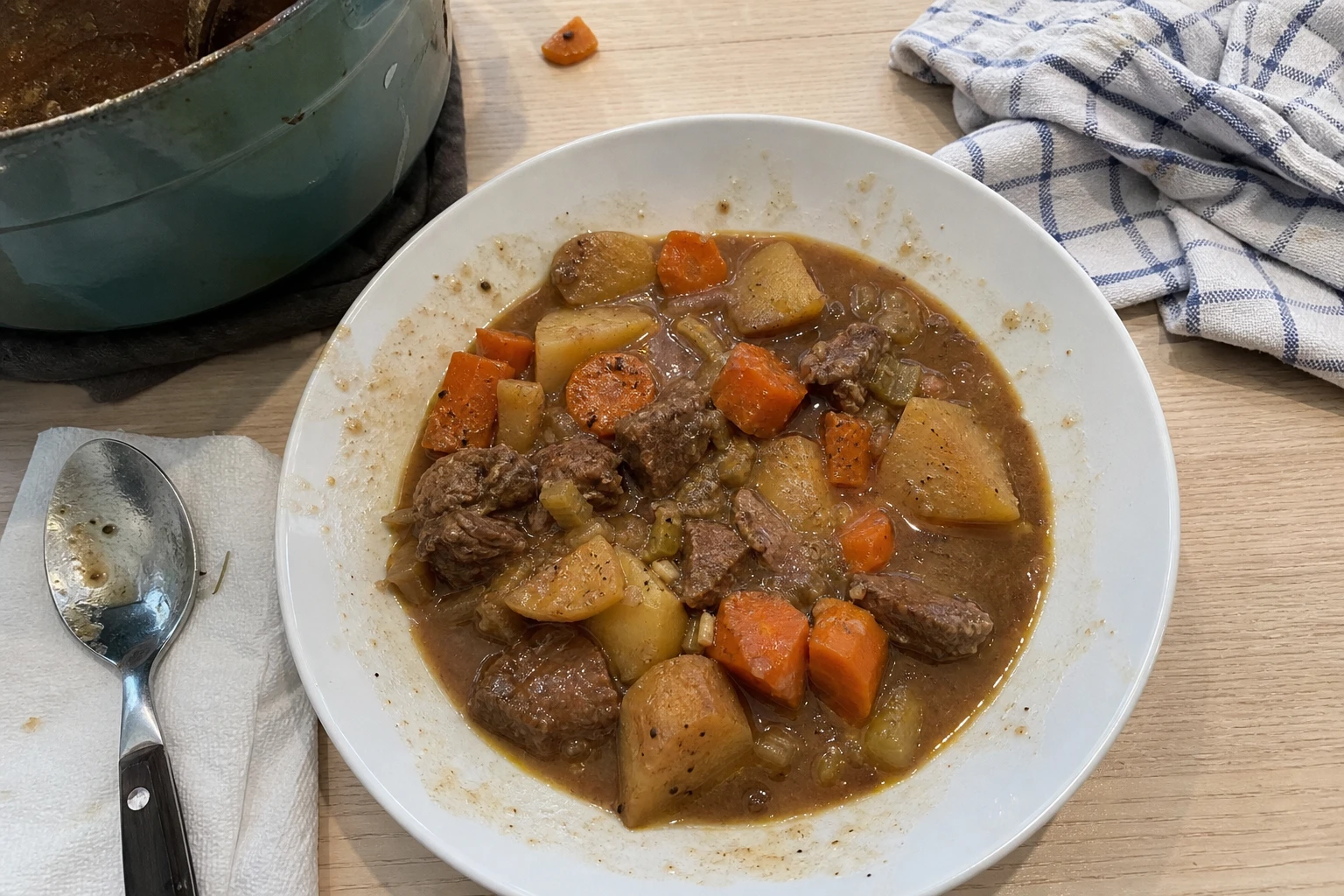
Finally, remember to discard the bay leaf—it’s not meant to be eaten, trust me on that! When it’s ready, ladle that divine stew into bowls, garnishing with freshly chopped parsley on top. The rich broth, tender beef, and colorful vegetables make for a picture-perfect dish that is sure to elicit smiles all around the table. Each bowl is bursting with flavor, and I also find that it provides a wonderful conversational piece when served. I often hear gasps of joy over the recipes shared from my blog, but really, the real art is in the sharing itself, as this stew sparks the warmth of conversation while gathering around, sparking joy from the first bite to the last.
Tips for Success
- For even richer flavor, consider adding a splash of red wine while simmering—the acidity balances beautifully with the beef, giving it a more complex taste. You’ll love the depth this simple addition brings!
- Leftovers can be stored in the fridge for up to 3 days or frozen for up to 3 months—just ensure they cool completely before transferring to a container. When you’re ready to enjoy it again, just reheat on the stovetop, and enjoy the aromas wafting through the air once more!
- Watch out not to overcook the vegetables; they should be tender yet still hold their shape when you add them to the stew. No one likes mushy carrots, right? A gentle simmer strikes that perfect balance!
- If you want more depth, toss in 1-2 tablespoons of Worcestershire sauce, which adds a wonderful umami flavor and richness to the broth. It will elevate your beef stew to new heights!
- Always taste and adjust seasoning right before serving—it’s the best way to ensure your stew is fresh and flavorful. Just a pinch of salt or a dash of pepper can make all the difference in creating your culinary masterpiece.
- A splash of balsamic vinegar just before serving can brighten the flavors beautifully! It’s a surprising twist that adds a layer of acidity to the stew, heightening every delicious bite. Remember, balance is key!
- For a bit of heat, you can include some diced jalapeños or a dash of cayenne pepper when sautéing the onions. It’ll bring a new level of warmth that’s just right for those chilly nights, without overwhelming the dish.
Equipment Needed
- Large pot or Dutch oven
- Cutting board
- Sharp knife
- Measuring cups and spoons
- Wooden spoon or spatula
Variations of the Homemade Beef Stew: A Hearty Comfort Meal
- Substitute chuck roast with stew meat or brisket for different flavors.
- Use sweet potatoes instead of regular potatoes for a hint of sweetness.
- Add parsnips or turnips for a unique twist on the typical vegetable mix.
- Incorporate red wine for a richer broth by replacing one cup of beef broth.
- Make it gluten-free by ensuring your beef broth and seasonings are certified gluten-free.
Serving Suggestions
- Serve alongside crusty bread or warm dinner rolls for dipping.
- Pair with a fresh green salad for a light contrast to the rich stew.
- Top with grated cheese for an extra layer of comfort and flavor.
- Offer a side of roasted Brussels sprouts or green beans for added vegetables.
- Enjoy with a glass of full-bodied red wine for a cozy dinner experience.
FAQs about Homemade Beef Stew: A Hearty Comfort Meal
How do I store leftover beef stew?
Store leftover stew in an airtight container in the refrigerator for up to 3 days. It also freezes well, so you can keep it for up to 3 months in the freezer—just make sure to thaw it overnight in the fridge before reheating.
Can I make beef stew in a slow cooker?
Absolutely! Brown the beef and sauté the onions and garlic first, then transfer everything to the slow cooker along with the other ingredients. Cook on low for 6-8 hours or high for about 4 hours until the beef is fork-tender.
Can I add other vegetables to the stew?
Yes! Feel free to experiment with seasonal vegetables like zucchini, celery, or even mushrooms for added flavor and nutrition. Just remember to adjust the cooking times slightly depending on the vegetables you choose.
What can I do if my stew is too thick?
If your stew turns out thicker than you'd like, simply stir in a little extra beef broth or water until you reach your desired consistency. Allow it to simmer for a few more minutes to blend the flavors.
Do I need to brown the beef first?
While it's not absolutely necessary, browning the beef first adds a wonderful depth of flavor and richness to the stew. That nice caramelization creates a beautiful base for the stew that enhances every bite.
Final Thoughts
There's nothing quite like a hearty bowl of Homemade Beef Stew to warm your heart and home. I encourage you to gather your loved ones and create your own delicious memories with this recipe; it's truly a dish meant to be shared!
Recipe card
Homemade Beef Stew: A Hearty Comfort Meal
Savor the warmth of my Homemade Beef Stew, a hearty comfort that brings family together. Try...
✿
Prep
0 min
Cook
0 min
Total
0 min
Serves
1
Calories
Protein
Carbs
Fat
Calories are per serving and stay the same when you scale servings above -- only ingredient amounts adjust.
Ingredients
Instructions
✿
www.mealsmell.com